Central Asian Innovation Hubs expands regional alliance as Tajikistan joins the platform
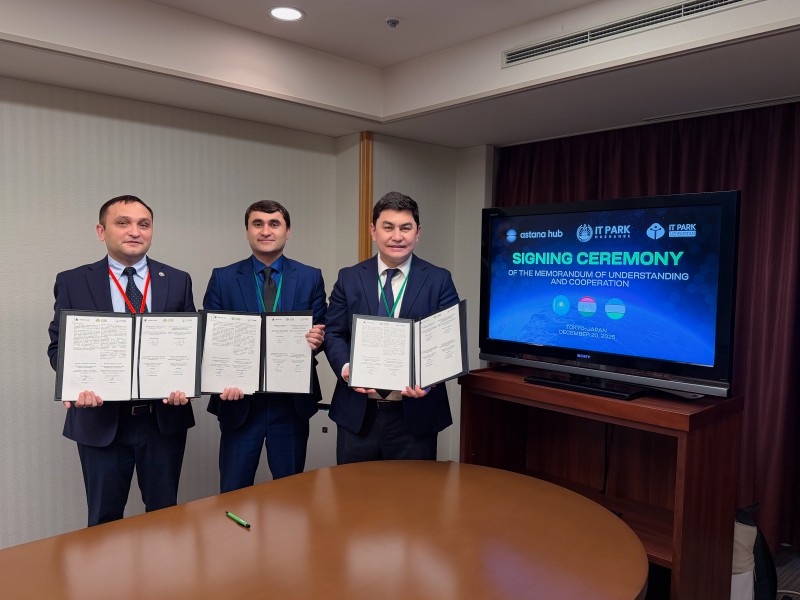
The growing alliance strengthens Central Asia’s position as an integrated innovation region with global reach. The Central Asian Innovation Hubs alliance continues its regional expansion, welcoming Tajikistan as its newest member — a move that reinforces the vision of Central Asia as a connected, investable, and globally relevant innovation region.

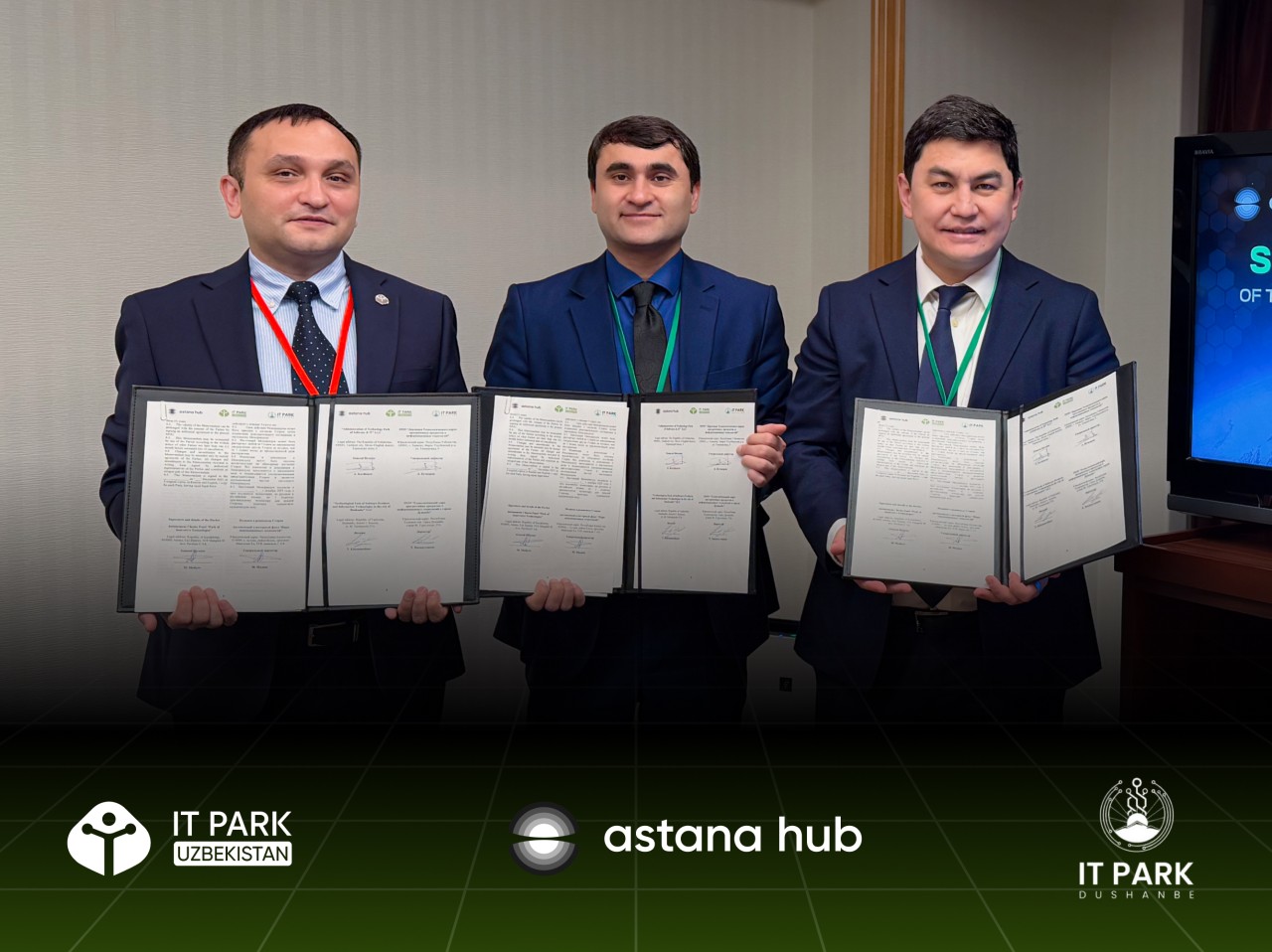
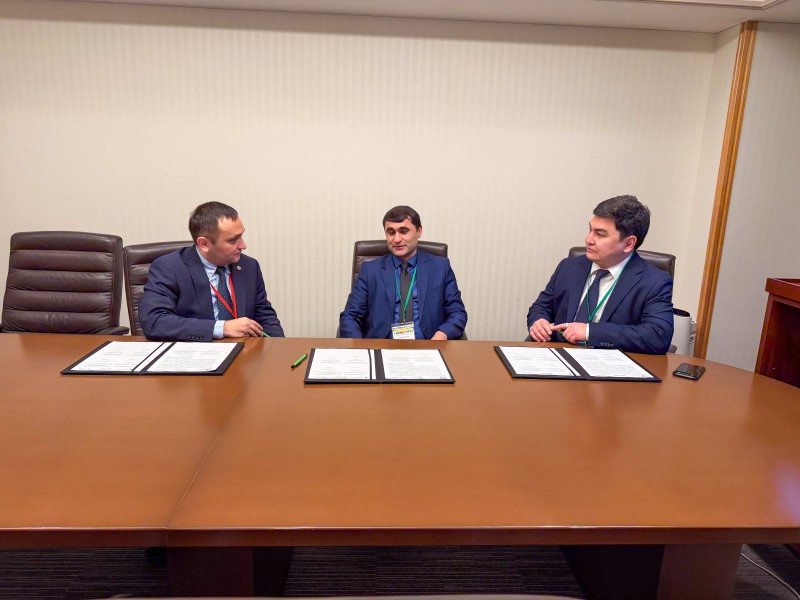
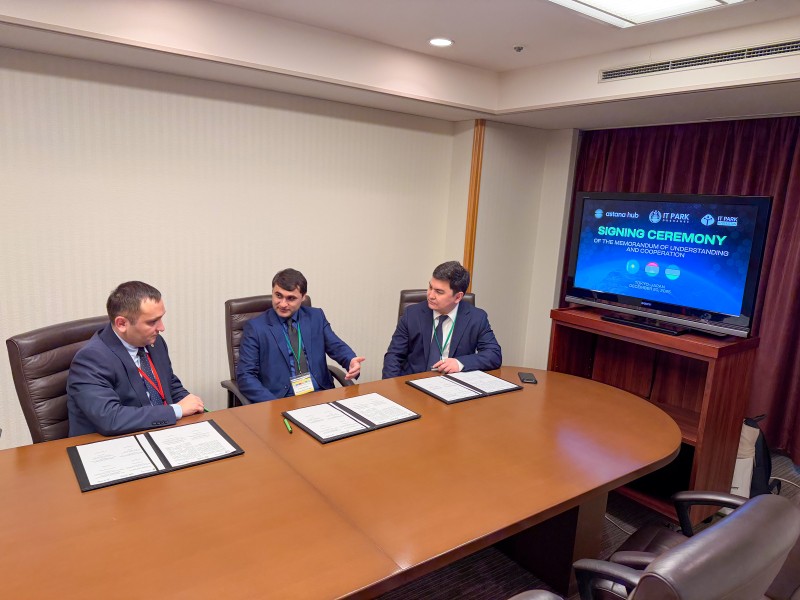
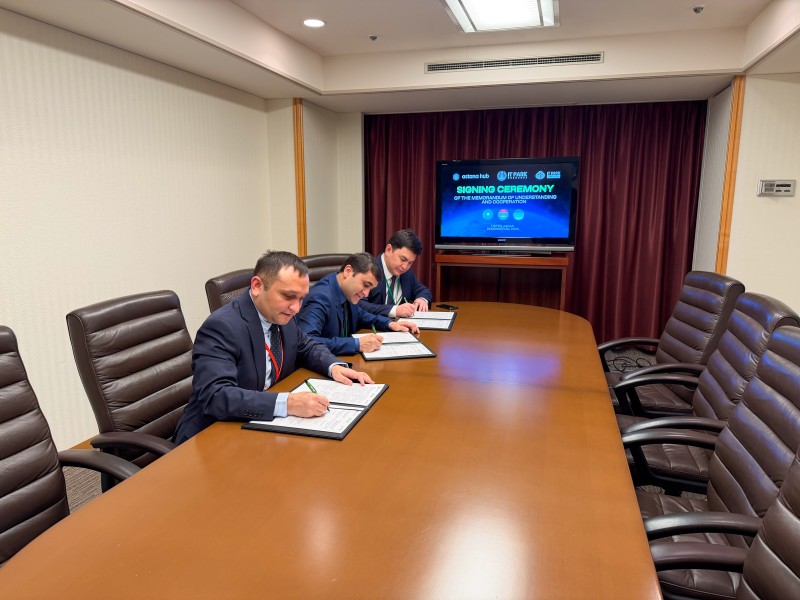
The memorandum was signed during the first C5+1 Summit in Japan by the CEO of IT Park Uzbekistan Abdulakhad Kuchkarov, CEO of Astana Hub Magzhan Madiev, and CEO of IT Park Dushanbe Temur Khisamutdinov, marking Tajikistan’s entry into the regional innovation platform. As a result, startups from Tajikistan will gain access to international acceleration programs, global technology exhibitions, and structured market-entry support provided within the alliance.
Launched during ICT Week Uzbekistan 2024 by IT Park Uzbekistan and Astana Hub, Central Asian Innovation Hubs was created to promote the region on a global stage and to build practical bridges between local startup ecosystems and leading international tech markets. From the outset, the alliance was designed as an execution-driven platform — focused not on declarations, but on measurable outcomes for founders and partners.
In a short period of time, the alliance has delivered tangible results. More than 100 startups from across Central Asia have participated under the Central Asian Innovation Hubs umbrella in nine major international technology exhibitions, including Web Summit Lisbon, TechCrunch Disrupt, GITEX Global, WAIC Shanghai, InMerge, as well as London Tech Week and Eurasia Tech Week.

These coordinated international presences have significantly increased the visibility of Central Asian founders and positioned the region as a single, emerging innovation market.
This exposure has translated into concrete investment outcomes. Uzbek startups alone, showcased through the Central Asian Innovation Hubs platform, have attracted over $82 million in funding, with more than 10 companies securing investments following participation in global exhibitions, pitching sessions, and investor matchmaking activities supported by the alliance.
In 2025, the alliance entered a new growth phase focused on structured international market entry. More than 30 startups from Central Asia are currently expanding into key markets — from Kazakhstan and the UAE to the United States.
U.S. market access has been facilitated through leading programs such as Draper University (Hero Training), AlchemistX, and the Silicon Valley Residency, providing Central Asian founders with direct exposure to global mentors, investors, and early customers.
In the Middle East, the Tumar Innovation Hub was launched during GITEX Global Dubai through the joint efforts of IT Park Uzbekistan and Astana Hub, providing structured support for Central Asian startups entering the MENA market. Alongside the hub’s launch, the Digital Startups Scale Up Program was rolled out in Dubai and successfully completed by 10 Central Asian startups, marking an important milestone in the region’s coordinated international expansion.
Additionally, the alliance has expanded to Shanghai, where the Khan-Tengri Innovation Hub has opened as the first platform connecting the innovation ecosystems of Central Asia and China. The hub will host its first acceleration program in early 2026, with eight Central Asian startups already selected to participate.
Regional integration has remained a core pillar of the alliance. Through the Kazakhstan Market Entry Program, 10 Uzbek startups presented their solutions to Kazakh partners, while 10 Kazakh startups expanded into Uzbekistan as part of the Digital Startup Awards acceleration track, creating a two-way flow of technology, talent, and market access within Central Asia.
Commenting on the expansion of the alliance, Abdulakhad Kuchkarov, CEO of IT Park Uzbekistan, noted that the accession of Tajikistan reflects the practical approach behind the Central Asian Innovation Hubs initiative.
“Our experience shows that when we align our ecosystems and work together, we can integrate the region — and our startups — into the global startup community faster and more effectively,” he noted. “Operating as a single alliance makes us stronger and more visible internationally. By bringing IT Park Dushanbe into Central Asian Innovation Hubs, we are extending this proven model to Tajik startups and giving them access to the same international opportunities available across the region.”
“Tajikistan’s accession to the Central Asian Innovation Hubs marks an important step toward building a strong and interconnected regional ecosystem. By joining forces, startups across Central Asia will gain more effective access to international markets. We believe that close collaboration with Tajikistan will accelerate the development of innovative technologies and help attract additional investment, ultimately strengthening Central Asia’s competitiveness on the global stage,” said Magzhan Madiev, CEO of Astana Hub.
The accession of Tajikistan represents the next step in strengthening the alliance’s regional depth, reinforcing a shared regional strategy — one where ecosystems scale faster and more sustainably through cooperation.
“This Memorandum establishes a framework for the development of the IT sector among the IT parks of the Republic of Uzbekistan, the Republic of Tajikistan, and the Republic of Kazakhstan, and also facilitates the expansion and deepening of mutually beneficial cooperation in the fields of information technologies, innovation, and the digital economy,” said Temur Khisamutdinov, CEO of IT Park Dushanbe.
As Central Asian Innovation Hubs continues to expand, its long-term ambition remains clear: to build a permanent, cross-border innovation platform that enables startups from Central Asia to raise capital, enter global markets, and compete internationally — not as isolated national ecosystems, but as a unified region with scale, credibility, and global ambition.
2025-12-21